Sportspower trampolines offer quality and craftsmanship for recreational fun, but require careful setup and adherence to safety guidelines for optimal use.
Prior to assembly, thoroughly read all instructions to minimize injury risks, and retain this manual for future reference.
Always inspect the trampoline before each use, ensuring stability and proper component condition.
What is a Power Sport Trampoline?
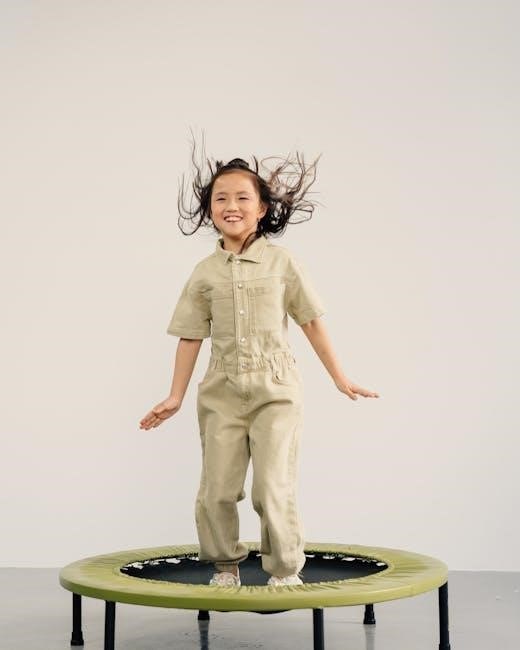
Power Sport trampolines are recreational fitness equipment designed for bouncing and playful activity, constructed with a steel frame, resilient springs, and a durable jumping mat.
These trampolines are intended for individual use, with a maximum weight capacity of 220lbs/100kg, and must be used with the provided safety enclosure.
Proper assembly, as detailed in these instructions, is crucial for safe operation.
Regular inspection of legs, springs, mat, and enclosure net is essential before each use to identify and address potential hazards.
Sportspower prioritizes user safety, emphasizing the prohibition of somersaults and flips due to the risk of severe injury.
Safety First: Understanding the Risks
Trampoline use inherently carries risks of injury, including sprains, fractures, and more severe incidents like paralysis or even death if safety precautions aren’t followed.
The most critical risk is associated with attempting somersaults or flips, which can lead to head and neck injuries.
Exceeding the 220lb/100kg weight limit or allowing multiple users simultaneously significantly increases the chance of accidents.
Consistent, mature supervision is mandatory, especially for younger children.
Daily pre-use inspections are vital to identify loose springs, tears in the mat or net, or frame instability – all potential hazards.

Unboxing and Parts List
Carefully unpack all components and verify against the parts list to ensure everything is present before beginning assembly.
Inspect each part for any shipping damage immediately upon unboxing.
Identifying All Components
Begin by laying out all trampoline parts in an organized manner. You should find the trampoline frame sections, typically curved steel pieces that connect to form the circular or rectangular base.
Next, locate the trampoline mat, the woven surface you’ll bounce on, and the springs, which attach the mat to the frame.
The safety enclosure system includes vertical poles, a top rail, and netting to prevent falls.
Also, identify the safety pad, designed to cover the springs and frame, and the leg supports for stability.
Confirm you have all hardware, like bolts and connectors, as listed in the included manual.
Checking for Missing or Damaged Parts
Carefully compare all received components against the parts list in your manual. Note any discrepancies – missing pieces must be addressed before assembly begins.

Inspect the frame sections for bends, dents, or corrosion. Examine the mat for tears, fraying, or damage to the stitching.
Check springs for rust or deformation; they should be uniform in size and tension.
Verify the enclosure netting is intact, without rips or holes, and that the poles are undamaged.
Ensure the safety pad is free of tears and securely attached. Contact Sportspower for replacements if needed.

Trampoline Assembly Instructions
Follow these steps carefully for safe and correct assembly: attach the frame, install springs, connect the safety enclosure, and secure the safety pad.
Attaching the Frame
Begin by laying out all frame components on a flat, protected surface. Ensure all parts are present and undamaged before proceeding. Connect the frame sections according to the diagram, typically using provided pins or bolts;
Verify each connection is secure and properly tightened. The frame must be stable and level to prevent wobbling during use. Double-check all connections, applying appropriate force without over-tightening.
A correctly assembled frame is the foundation for a safe and enjoyable trampoline experience, so take your time and ensure accuracy.
Spring Installation – A Step-by-Step Guide
Begin by evenly spacing the springs around the trampoline mat and frame. Utilize the spring puller tool (often included) to safely attach each spring, hooking one end onto the mat’s ring and the other onto the frame.
Work your way around the trampoline, ensuring consistent tension. Avoid uneven spring placement, as this can lead to instability. Regularly check spring connections as you progress, confirming secure attachment.
Proper spring installation is crucial for a safe bounce; inspect for loose or damaged springs before each use.
Connecting the Safety Enclosure
Attach the safety enclosure poles to the trampoline frame, ensuring they are securely fastened and evenly spaced. Carefully connect the enclosure net to both the poles and the trampoline mat using the provided clips or ties.
Verify the net is taut and completely encloses the jumping surface, leaving no gaps. Double-check all connections for stability and proper alignment. A correctly installed enclosure is vital for preventing falls.
Regularly inspect the enclosure net for tears or damage, and maintain its integrity for continued safety.
Securing the Safety Pad
Position the safety pad over the trampoline springs and frame, ensuring complete coverage to minimize impact during accidental contact. Securely attach the pad to the trampoline frame using the provided straps or fasteners, tightening them evenly for a snug fit.
Confirm the pad remains firmly in place and doesn’t shift during use. Regularly inspect the pad for wear and tear, replacing it if damaged. A properly secured safety pad significantly reduces the risk of injury.
Consistent checks are crucial for maintaining a safe jumping environment.

Pre-Use Inspection Checklist
Before each jump, inspect legs, springs, mat, and enclosure for damage or looseness. Daily checks ensure a safe and enjoyable trampoline experience.
Leg and Frame Stability Check
Ensuring a stable foundation is paramount for safe trampoline use. Begin by visually inspecting each leg for proper attachment to the frame, confirming no components are loose or missing.
Carefully examine each leg for any signs of cracks, bends, or corrosion, which could compromise structural integrity.
Gently apply pressure to each leg, testing for wobble or instability. The frame itself should be level and free from sagging or bending.
A wobbly frame or unstable legs indicate a potential hazard and require immediate attention before allowing anyone to use the trampoline.
Prioritize stability for a secure jumping experience.
Spring Tension and Condition
Consistent spring tension is crucial for a safe and enjoyable bounce. Visually inspect each spring, looking for signs of rust, stretching, or damage. Ensure all springs are securely attached to both the trampoline mat and the frame.
Check for any loose or missing springs, as uneven tension can create instability and increase the risk of injury.
Gently test the tension of several springs by pressing down on the mat near each one; they should offer similar resistance.
Replace any damaged or weakened springs immediately to maintain optimal performance and safety.
Regular spring checks are vital.
Mat and Enclosure Net Inspection
Thoroughly inspect the trampoline mat for any tears, holes, or signs of wear. Pay close attention to the stitching around the edges, as this is a common area for damage.
Examine the enclosure net for rips, fraying, or loose connections. Ensure the net is securely attached to the frame and that all zippers and closures are functioning correctly.
Verify that the net provides a complete enclosure, preventing users from falling off the trampoline.
Address any damage to the mat or net immediately, either by repairing it or replacing the affected component.
Consistent checks are essential for safety.
Daily Pre-Inspection Routine
Before each use, a quick daily inspection is crucial for safe operation. Begin by checking leg attachments for proper security and any signs of cracking or weakness.
Carefully inspect the netting for any new tears or damage that may have occurred since the last thorough inspection.
Examine all springs, ensuring they are securely attached and haven’t become loose or damaged.
Finally, inspect the mat itself for any tears or signs of wear.
Also, check the frame for sagging or cracks. A consistent routine minimizes risks.
Safe Trampoline Usage Guidelines
Always limit use to one person at a time, with a maximum weight of 220lbs/100kg, and ensure mature, knowledgeable supervision is present.
Never attempt somersaults or flips!
One Person at a Time Rule
Strictly adhere to the “one person at a time” rule to significantly reduce the risk of injury while enjoying your Sportspower trampoline.
Multiple users simultaneously increase the likelihood of collisions, falls, and potential for serious harm, including sprains, fractures, or more severe injuries.
The trampoline is designed and tested for a single user’s weight and movements.
Exceeding this limitation compromises the structural integrity and safety features.
Consistent enforcement of this rule is paramount for a safe and enjoyable bouncing experience for everyone.
Prioritize safety above all else.
Weight Limit – 220lbs/100kg
Adhering to the maximum weight limit of 220lbs (100kg) is crucial for safe trampoline operation and longevity of the product.
Exceeding this weight capacity can compromise the trampoline’s structural integrity, leading to potential component failure, such as spring breakage or frame bending.
This increases the risk of falls and serious injuries for the user;
The weight limit accounts for a single user only; combining weights is strictly prohibited.
Regularly remind all users of this important safety guideline to prevent accidents and ensure a secure bouncing experience.
Prioritize safety and follow the guidelines.
Supervision Requirements
Constant, mature, and knowledgeable supervision is absolutely essential whenever the trampoline is in use, particularly for younger children.
Adult supervision allows for immediate intervention in case of unsafe behavior, such as multiple users, improper bouncing techniques, or falls.
Supervisors should enforce all safety rules, including the one-person-at-a-time policy and the prohibition of somersaults.
Never leave children unattended on or around the trampoline, even for a brief moment.
Responsible supervision significantly reduces the risk of injuries and ensures a safe and enjoyable experience for all users.
Prioritize attentive oversight.
Avoiding Somersaults and Flips – Critical Safety Warning
Under no circumstances should users attempt somersaults or flips on this trampoline. These maneuvers drastically increase the risk of severe, life-altering injuries.
Landing on your head or neck during a somersault or flip can result in paralysis or even death.
The trampoline is designed for controlled bouncing, not for acrobatic stunts.
Even experienced gymnasts can suffer catastrophic injuries attempting these maneuvers on a trampoline.
Supervisors must actively discourage and prevent any attempts at somersaults or flips, enforcing this rule strictly.
Prioritize safety above all else.

Maintenance and Care
Regular cleaning, spring replacement when needed, and prompt enclosure net repairs are crucial for maintaining your Sportspower trampoline’s safety and longevity.
Regular Cleaning Procedures
Maintaining a clean trampoline is essential for user safety and extending the product’s lifespan. Regularly inspect the jumping mat, removing any debris like leaves, twigs, or small objects that could pose a hazard.
The frame and safety pad should be wiped down periodically with a mild soap and water solution. Avoid abrasive cleaners, as they can damage the materials.
Inspect the enclosure net frequently for dirt and grime, cleaning it gently with a soft cloth and water. Ensure all cleaning solutions are thoroughly rinsed to prevent slippery surfaces.
Consistent cleaning contributes to a safer and more enjoyable bouncing experience.
Spring Replacement Guide
Replacing worn or damaged springs is crucial for maintaining trampoline safety and bounce quality. Always replace springs in sets to ensure even tension distribution across the mat.
Use a spring puller tool to safely detach and attach springs, avoiding hand injuries. Ensure the spring ends are securely hooked onto both the mat and the frame.
Inspect all remaining springs for wear and tear during replacement. Consistent spring condition is vital for a stable jumping surface.
Proper spring replacement restores optimal performance and minimizes injury risk.
Enclosure Net Repair
A damaged enclosure net compromises user safety and must be addressed immediately. Small tears can often be repaired using a heavy-duty netting repair kit, available at most sporting goods stores.
Ensure the patch fully covers the tear, extending beyond the damaged area for secure adhesion. For larger rips or significant net deterioration, complete net replacement is recommended.
Regularly inspect the net for wear, especially at connection points. A properly maintained enclosure is essential for preventing falls.
Prioritize net integrity for safe jumping.
Troubleshooting Common Issues
Addressing problems like frame instability, spring issues, or mat tears is crucial for safe operation. Inspect legs, springs, and the mat regularly for damage.
Addressing Frame Instability
Frame instability presents a significant safety hazard and requires immediate attention. Begin by carefully inspecting all leg attachments, ensuring they are securely fastened and haven’t loosened over time. Check for any visible cracks or bends in the frame itself, as these compromise structural integrity.
Ensure the trampoline is placed on level ground; uneven surfaces contribute to wobbling. If sagging is observed, redistribute weight evenly or consider replacing compromised frame components.
Regularly inspect the frame for cracks and address them promptly to maintain a safe bouncing experience.
Dealing with Spring Problems
Loose or damaged springs drastically impact trampoline safety and bounce quality. Regularly inspect each spring for signs of rust, stretching, or breakage during your pre-use checks. A missing spring creates an uneven surface and increases stress on remaining components.
To replace a spring, use a spring puller tool for safe and efficient installation. Ensure the new spring matches the original specifications.
Never attempt to jump on a trampoline with compromised springs; immediate replacement is crucial for preventing injuries.
Repairing Mat Tears
Mat tears compromise the integrity of your trampoline and pose a significant safety hazard. Small tears can quickly expand during use, leading to falls. Immediately discontinue use if any tears are detected during pre-use inspection.
For minor tears, a specialized trampoline patch kit is recommended. Thoroughly clean the area around the tear before applying the patch, ensuring a strong bond.
Larger tears or damage necessitate mat replacement; attempting to repair extensive damage is unsafe. Contact Sportspower for replacement mat options.

Customer Support and Warranty Information
For assistance, contact Sportspower Ltd. at 1-866-370-2131 or visit www.sportspowerltd.net, Monday-Friday, 9 AM – 5 PM Eastern Time.
Contacting Sportspower Ltd.
Should you require assistance with your Sportspower trampoline, reaching their customer support team is straightforward. You can connect with them via telephone by calling 1-866-370-2131. Their dedicated representatives are available to address your queries and concerns during business hours.
Alternatively, you can visit their comprehensive website at www.sportspowerltd.net. The website provides a wealth of information, including frequently asked questions, troubleshooting guides, and downloadable resources. Support is available Monday through Friday, between 9:00 AM and 5:00 PM Eastern Time.
For corporate inquiries, you may reach them at 1-800-497-6106.
Warranty Details and Coverage
Sportspower Ltd. stands behind the quality of its trampolines, offering a warranty to protect against manufacturing defects. Specific warranty terms and duration vary depending on the component. It’s crucial to retain your proof of purchase, as it’s required for all warranty claims.
The warranty typically covers the frame, springs, mat, and safety enclosure net. However, it does not cover damage resulting from misuse, accidents, or normal wear and tear. Regularly inspect your trampoline and follow all safety guidelines to maintain warranty validity.
Contact customer support for detailed warranty information.